Book
The Windup Girl
★★★★☆
August 16, 2026 · by Colin Merritt
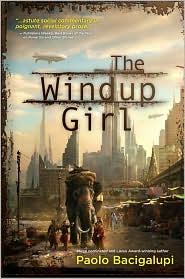
This book seems to split people right down the middle, and having finished it I understand exactly why. It’s set in a future Bangkok after oil’s run out and calories themselves have become the real currency, genetically engineered megodonts hauling cargo where trucks used to, biotech plagues wiping out crop species faster than anyone can breed resistant strains, and Bacigalupi does not hold your hand through any of this world-building. You either settle into the density or you bounce off it hard, and I’ve seen both reactions from people whose taste I otherwise trust.
I settled into it, mostly. The title character, Emiko, a genetically engineered “windup” designed and conditioned for obedience, is the emotional center of the book and also the hardest part to sit with, since her chapters deal directly with exploitation and dehumanization in ways that are clearly the point and still genuinely uncomfortable to read. That discomfort feels intentional rather than gratuitous, but it’s worth knowing going in.
Where the book earns its density is in how completely thought through the ecological and economic collapse actually is. This isn’t a vague “the world got worse” backdrop, it’s a specific, internally consistent system of calorie companies, genehacked plagues, and a Thai kingdom that’s survived better than most of the world specifically because it closed its borders to foreign biotech early. That specificity is what separates this from a lot of other dystopian sci-fi I’ve read, where the collapse is mostly scenery for a plot that could happen anywhere.
I wouldn’t hand this to someone looking for an easy entry into the genre. It rewards patience and punishes skimming. But if you’re willing to do the work the book asks of you, the world it builds is one of the more fully realized ecological catastrophes I’ve read in fiction, and I still think about the megodonts more than I’d like to admit.